Loans Can Kill Your Business
Debt can fuel growth, or it can quietly drain the cash your business needs to survive. Here’s how to tell the difference before you sign, and the warning signs that a loan is working against you.
Zentavos CFO Team
3 min read
Every week we meet owners who took a loan to solve a problem and ended up with a bigger one. The loan itself wasn’t evil. The problem was that nobody checked whether the business could actually carry the payment — in a slow month, not just a good one.
Debt is a tool. Used well, it buys equipment that pays for itself, inventory that turns into profit, or a second location that doubles revenue. Used badly, it turns a temporary cash crunch into a permanent one.
Why loans go wrong
Borrowing to cover losses. If the business is losing money every month, a loan only delays the reckoning — and adds interest on top.
Payments sized to your best month. Revenue is seasonal for most small businesses. A payment that feels easy in December can be crushing in February.
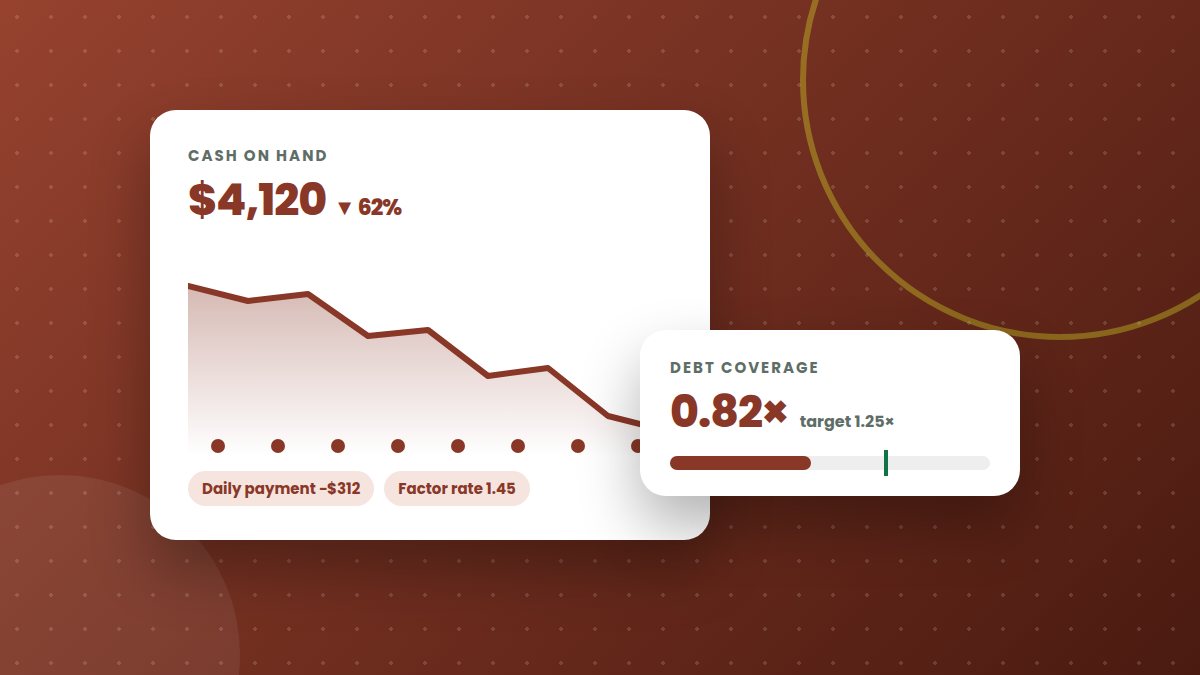
Expensive, fast money. Merchant cash advances and some online lenders quote a "factor rate" instead of an interest rate. Converted to an annual rate, short-term advances often cost far more than a bank loan — sometimes triple digits.
Daily or weekly withdrawals. Frequent automatic payments pull cash out before you can pay payroll, rent or suppliers.
Stacking. Taking a second advance to pay the first is a spiral that ends badly.
Run the numbers before you sign
Lenders look at a figure called the debt service coverage ratio — the cash your business generates divided by the total debt payments you owe. You should look at it too.
Add up your average monthly cash profit over the last 12 months — not your best quarter.
Add up every monthly debt payment you have now, plus the new one.
Divide the first number by the second. Many banks want to see at least 1.25 — $1.25 of cash for every $1 of payments. Below that, you have no cushion for a slow month.
Know what you’re really paying
Ask every lender for the annual percentage rate (APR), the total dollars you will repay, the payment schedule and any prepayment penalty. If a lender won’t give you an APR, treat that as a warning. Read the personal guarantee carefully: it means your house and savings can be on the line if the business can’t pay.
Good debt pays for itself. Bad debt pays for yesterday’s problems.
When a loan makes sense
The money buys something that produces more cash than the payment costs — equipment, inventory with proven demand, or a location with a clear revenue plan.
Your coverage ratio stays healthy even in slow months.
You have compared at least three offers, including a bank or credit union and an SBA-backed option.
You have a written plan for how the loan gets repaid.
If you’re already in trouble
Stop adding new debt. List every loan with its balance, rate and payment, and talk to your lenders before you miss a payment — many will restructure terms. Refinancing expensive short-term advances into a longer-term loan can free up cash immediately. And get a clear, weekly view of your cash flow so you see the next crunch coming.
The Zentavos CFO team reviews loan offers with clients every week. Before you sign, send it to us — ten minutes of review can save you years of payments.
This article is general information, not tax, legal or investment advice. Every business is different — talk with your Zentavos CPA before making decisions.
NEXT ARTICLE
Is It Time for Accrual Accounting?